Patent Attorney / IP
Prior art, freedom-to-operate, and enablement documentation.
Recommended reading order
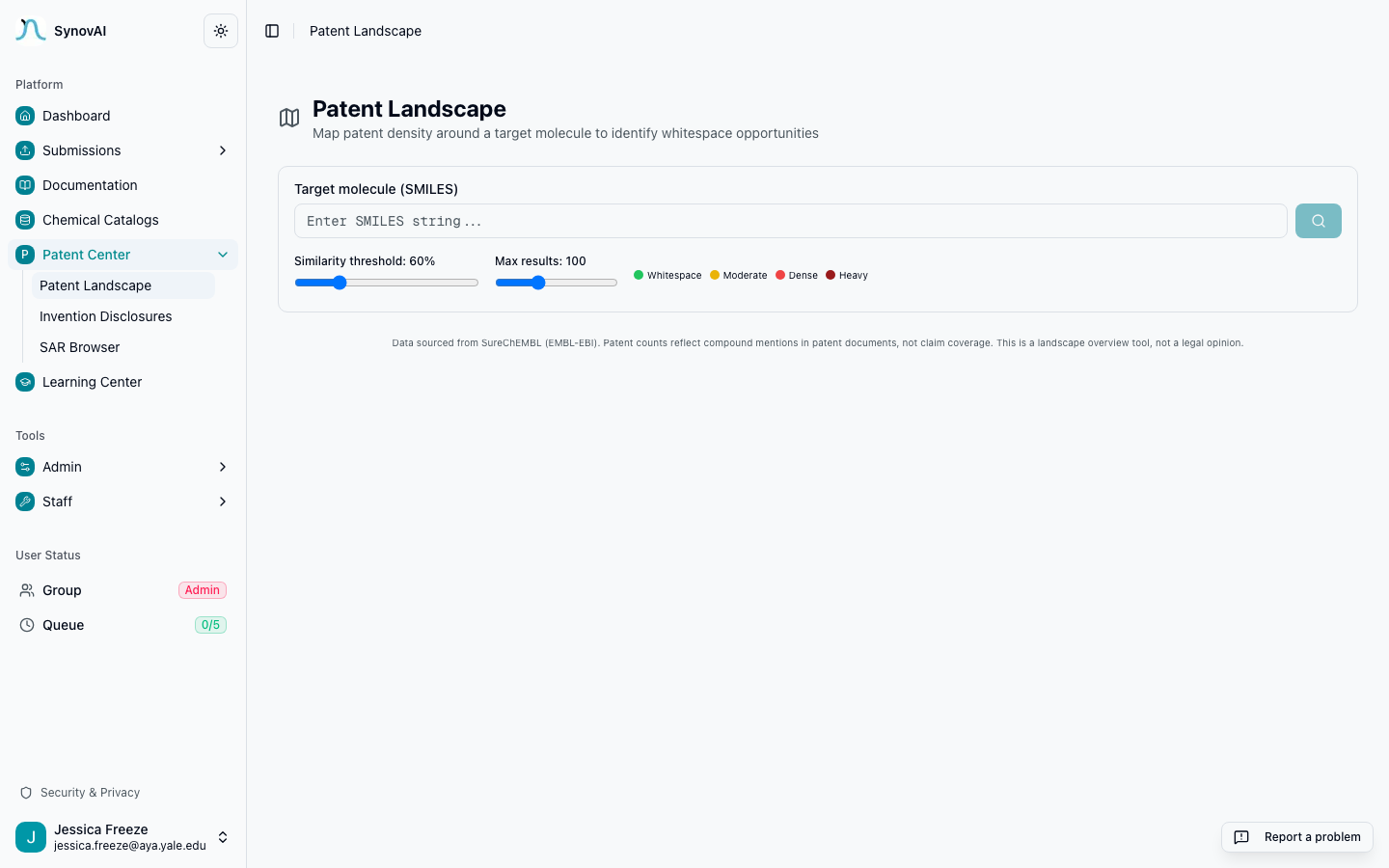
4 pages- 1FeaturesPatent landscapeMap patent density around a target and surface whitespace analogs to plan synthesis on.
- 2FeaturesInvention disclosuresGenerate and manage IDF drafts with auto-populated prior art and route metadata.
- 3Getting StartedViewing reference entriesOpen patent literature procedures for any reaction step.
- 4FeaturesSubstructure exclusionExclude routes containing any molecule matching a SMARTS pattern.
Why this role uses SynovAI
Support patent strategy and due diligence with evidence-based synthetic analysis.
Prior art discovery for synthetic methods
Each reaction step in a proposed route links to patent references from the training data. Use the reference viewer to access the original patent documents, reaction conditions, and experimental procedures. This provides a structured starting point for prior art searches — particularly useful when evaluating whether a proposed synthetic method is novel or anticipated by existing literature.
Freedom-to-operate route analysis
When assessing manufacturing freedom for a drug substance, generate multiple alternative synthetic routes to your target. Review the patent references associated with each step to identify routes that avoid patented transformations. Routes with references to expired patents or well-established (non-proprietary) chemistry offer lower IP risk for manufacturing.
Synthetic feasibility documentation for patent applications
When filing patents that claim novel compounds, examiners may challenge synthetic feasibility. Use the platform to generate plausible retrosynthetic routes with literature-backed procedures for each step. The confidence scores, reference entries, and experimental procedures provide documentary evidence supporting the enablement requirement of your patent specification.