Updated May 5, 2026
Validating synthetic feasibility of computationally designed molecules
Computational chemist: triage virtual hits by tractability before committing wet-lab resources.
Computationally generated hits are only useful if they're synthetically accessible. This tutorial uses batch retrosynthesis to triage a list of candidate structures by tractability before committing wet-lab resources.
Steps
- Export your hit list from the docking, generative-model, or virtual-screen workflow as SMILES (one per line, plain text).
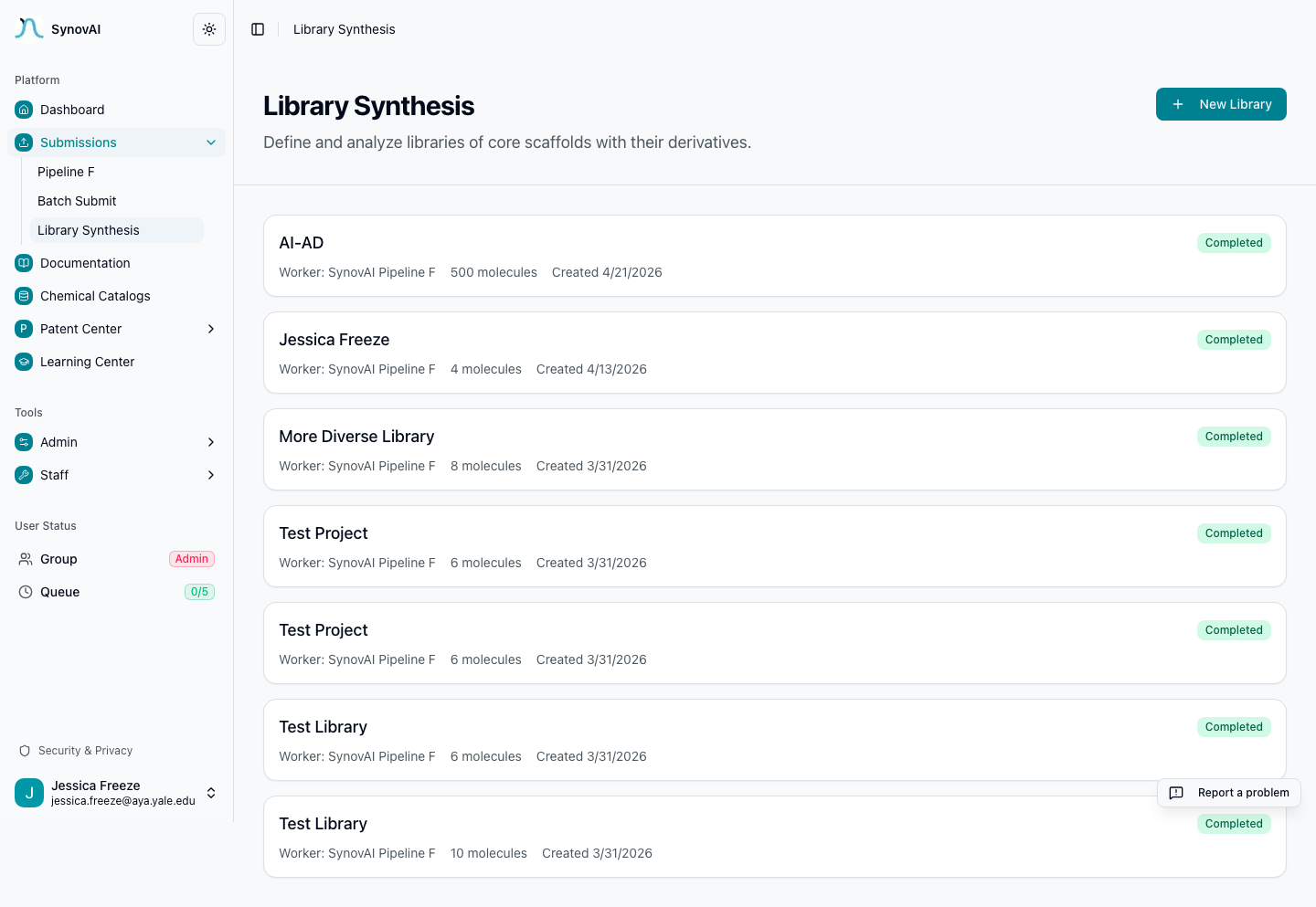
- Open Submissions → Library Synthesis and pick the Quick List mode.
- Paste the hit list into the input. Or upload a
.smi,.csv, or.sdffile. - Submit. Each candidate runs as its own retrosynthesis.
- When the library completes, the dashboard auto-runs convergence analysis across all results. Open the convergence panel to see shared intermediates across the hit set.
- Review each hit's top route. Triage criteria:
- High confidence routes (well-precedented chemistry).
- Short routes (fewer steps to bench-tested compound).
- Commercially available starting materials (turn on the commercial stock filter before submission, or check vendor badges in each result).
- Promote the tractable subset to your synthesis queue. Park the rest, or rerun them with a deeper precedent setting if you suspect the model just didn't find the route on first pass.
Output
A ranked list of synthesizable hits with concrete routes attached, vs a flat hit-list of which compounds you can't immediately make. Saves months of false-start chemistry.