Updated May 5, 2026
Designing safer routes at the source
Environmental chemist: avoid hazardous intermediates and persistent functional groups at planning time.
Designing chemistry to avoid hazardous intermediates and persistent functional groups at the start is dramatically cheaper than mitigating them later. This tutorial uses the platform's hazard flags and reagent-swap suggestions to plan safer routes from the outset.
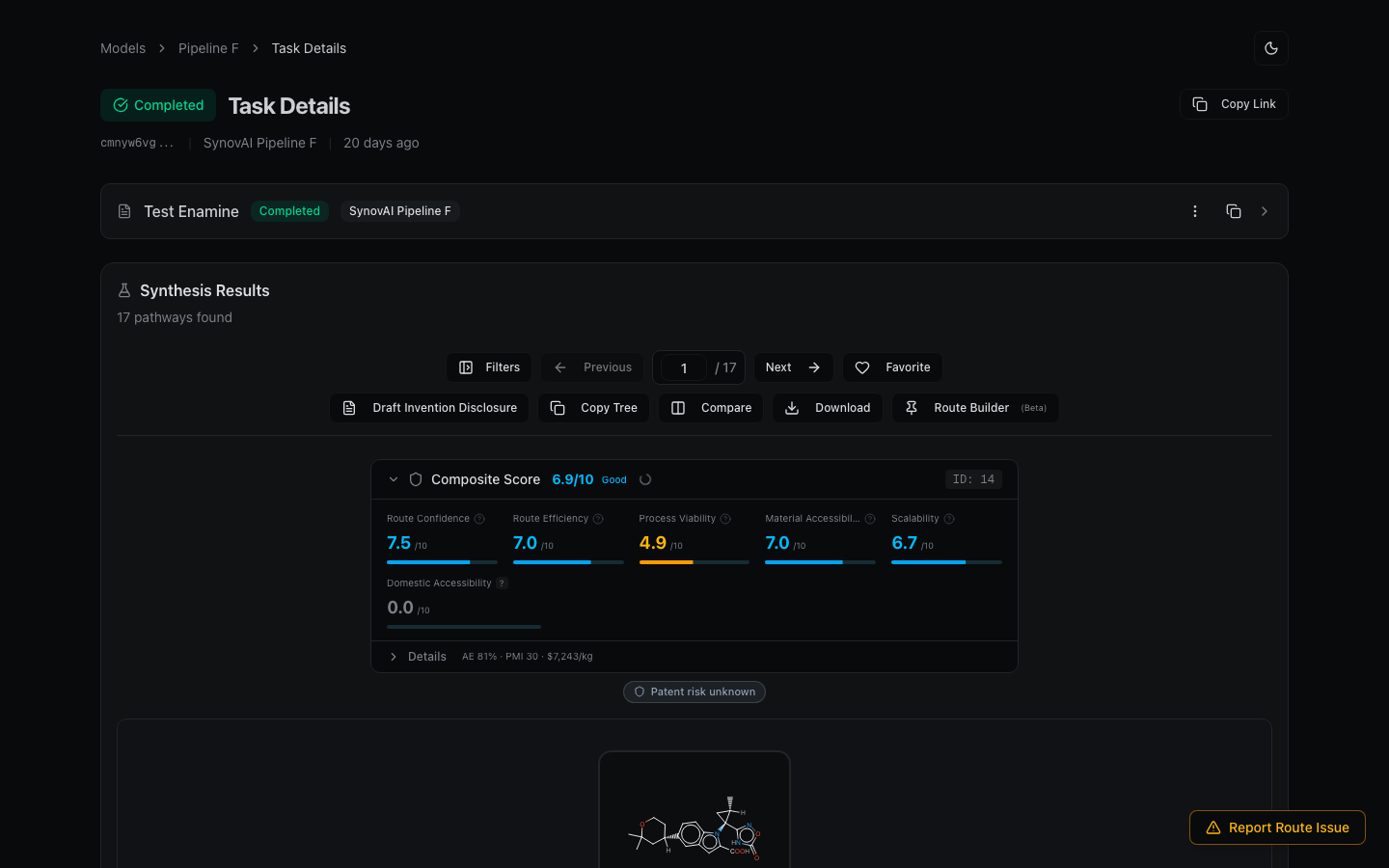
Steps
- Submit your target through the retrosynthesis form. If you have a list of preferred green starting materials, use the Specify Starting Material option to constrain the search.
- On the result, look at the hazard flags on each step: carcinogens, persistent organic pollutants, severe-toxin reagents, and explosive-handling concerns are marked automatically.
- For any flagged step, open the reagent swap suggestions. The panel proposes greener or safer alternatives drawn from published chemistry, with notes on equivalence and trade-offs.
- Use the scoring profiles to apply a green-chemistry weighting if you want hazardous routes ranked lower automatically rather than visually flagged.
- Re-rank routes with the green profile applied. The top routes are those that minimize hazardous reagents and persistent functional-group intermediates while still reaching the target.
- Favorite the safest viable route. Use Route Builder to swap individual steps where the green alternative comes from a different parent route.
Output
A route designed under green chemistry constraints from the start, not retrofitted in process development.