Updated May 5, 2026
Mechanism-driven synthesis design
Educator: turn retrosynthesis output into a hands-on mechanism + selectivity exercise.
Connecting reaction mechanisms to real synthesis decisions is one of the highest-leverage parts of a chemistry education. This tutorial turns retrosynthesis output into a structured mechanism exercise.
The exercise
- Assign a target. Choose a target whose syntheses involve selectivity and functional-group compatibility decisions, so mechanism actually matters.
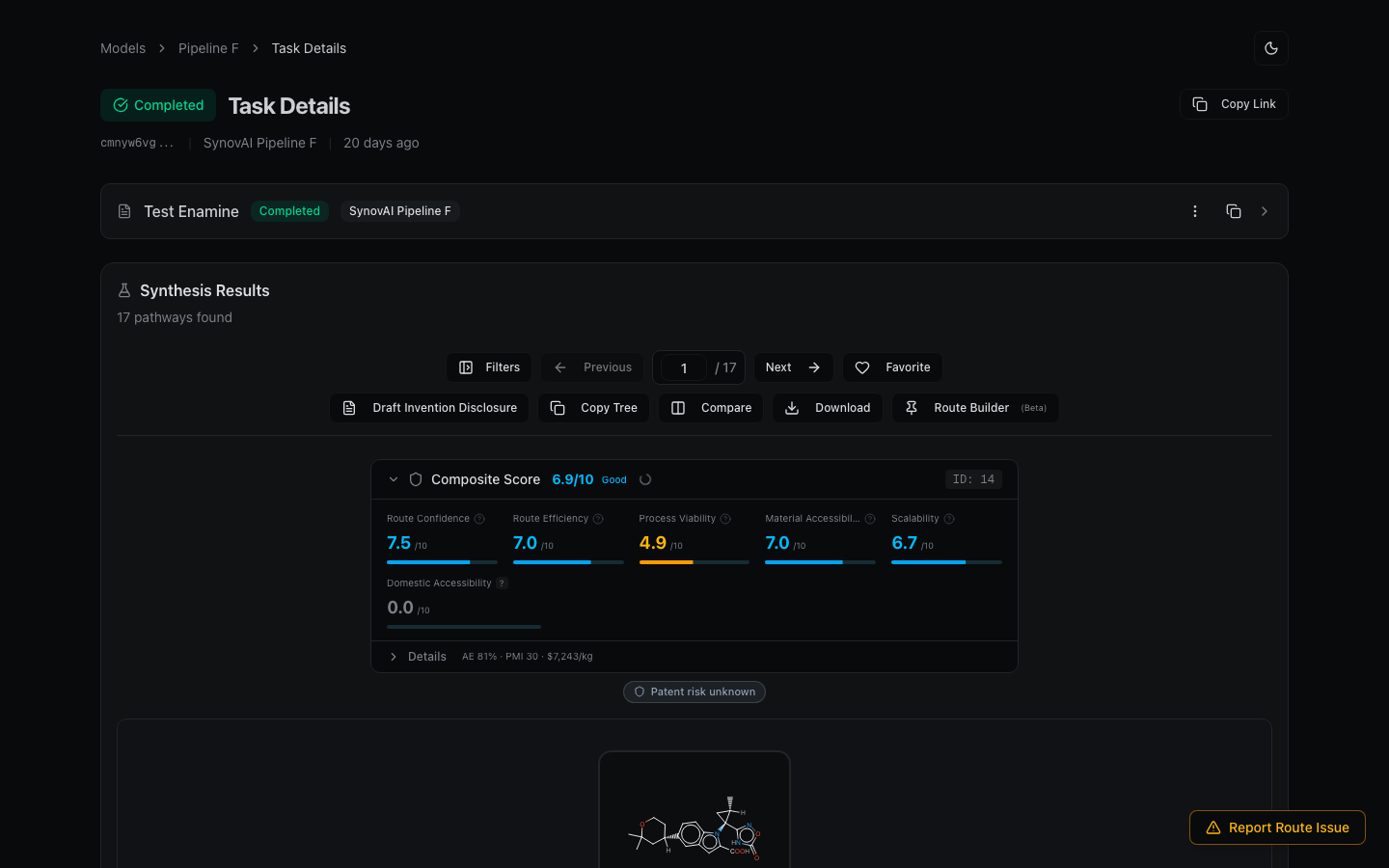
- Have each student submit the target and pick three distinct routes from the result set. They favorite their three choices to come back to.
- For each chosen route, students draw the full mechanism for each reaction step. Curly arrows, electron flow, transition states. Hand-drawn or in their preferred drawing tool.
- For each step, students justify the disconnection in one paragraph: electronic structure, functional-group compatibility, selectivity considerations, kinetic vs thermodynamic control.
- Compare against the platform. Use View Reference Entries on each step to see the literature procedures. Are the conditions consistent with the student's mechanism? If the mechanism predicts a competing pathway under the published conditions, why doesn't the literature procedure show it?
- Group discussion. Where did students predict a different outcome from the published one? Which mechanisms held up to inspection of the actual reagent quantities and conditions? The gap between hand-mechanism and real-world procedure is exactly where intuition develops.
Why this works
The platform provides three concrete, ranked routes per target plus the literature evidence for each. Students get to do the mechanism-drawing work that builds chemical intuition while having ground truth (and disagreement!) to argue against.